VinylVault
The Problem Was Personal
I've collected vinyl records for years, but my archive system was held together by memory and a messy CSV file.
Which pressings were special editions?
What did I actually pay for the last record?
Whether or not my original Pink Floyd copy signed by Roger Waters was in the right column or not?
If I wanted to know the market value of my collection, I had to manually cross-check multiple databases, which meant I didn't.
This is a common collector problem, but the existing solutions were either too expensive or required sacrificing the interface experience.
VinylVault started as a simple question:
What would I actually want to open every day?
The Process
01 / Challenge
Product Thinking Without the Engineering Background
My background is product design and UX strategy, not software engineering. Twenty-plus years thinking about products and experiences, but building a real app from scratch was different.
I needed barcode scanning, Discogs API integrations, synced local storage, market value tracking, and a clean interface that made a collector want to use it.
The advantage I had was clarity. I knew exactly what I wanted, however, the missing piece was execution.
02 / Approach
Iteration Over Shortcuts
I worked with Claude Code (terminal) on this, and what surprised me was the process itself. This wasn't "generate an app and hope it works." It was 36 iterations of careful refinement.
Each version surfaced something worth fixing. A barcode scanner timing bug that only appeared under specific lighting. The search dropdown is closing when it shouldn't. A hero image path-breaking on deployment. Mobile overflow issues that only showed up on a real device, not in the browser.
Thirty-six times felt like a lot, until I realized each one made the app feel less like a project and more like a real product. That's the difference between shipping and earning the right to ship.
The collaboration was direct. I'd identify what wasn't working. Claude Code would propose solutions. I'd test them, iterate, push back when the approach missed the mark. This cycle made the tool better, faster, and more aligned with what I actually needed.
03 / What It Does
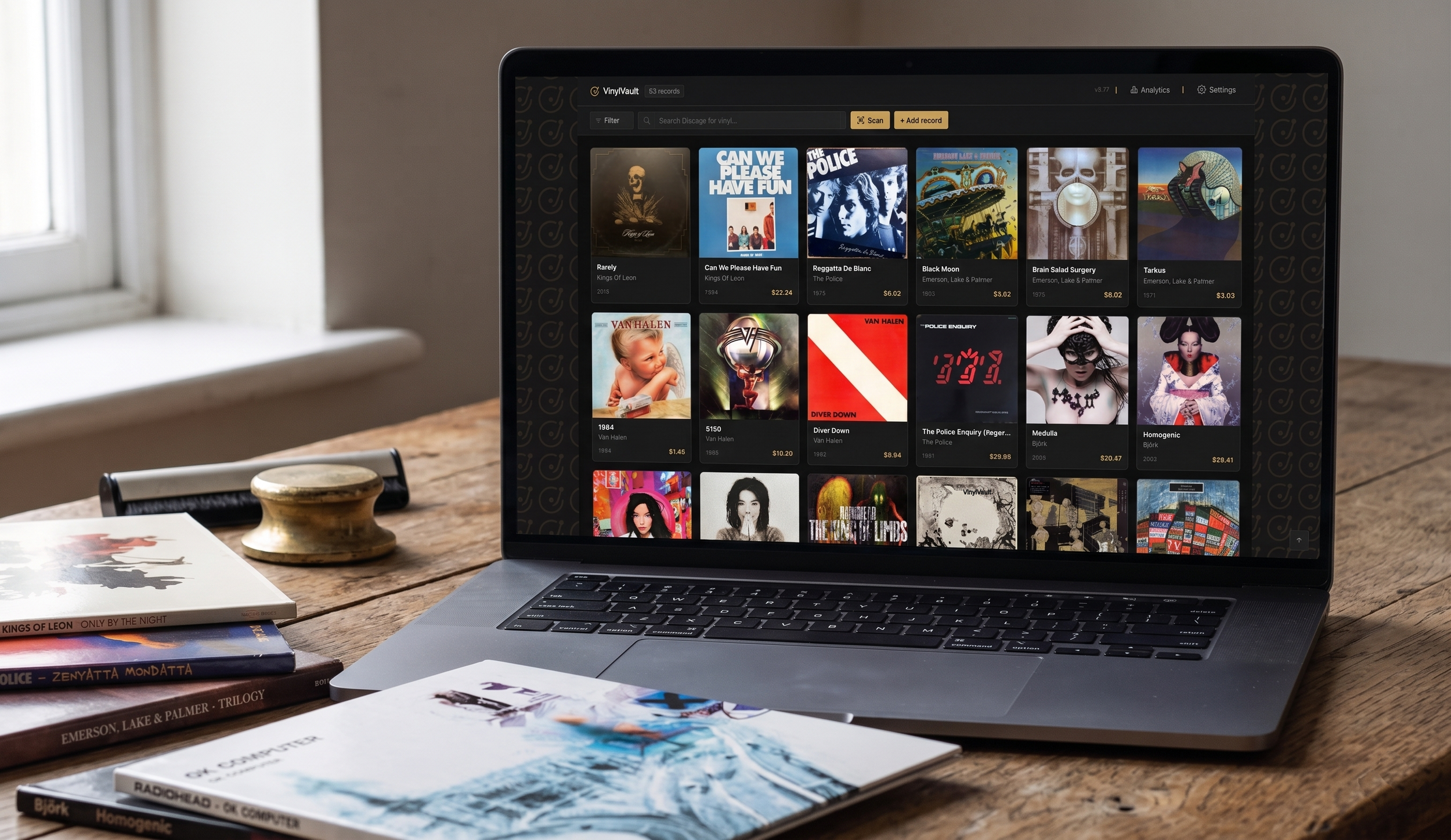
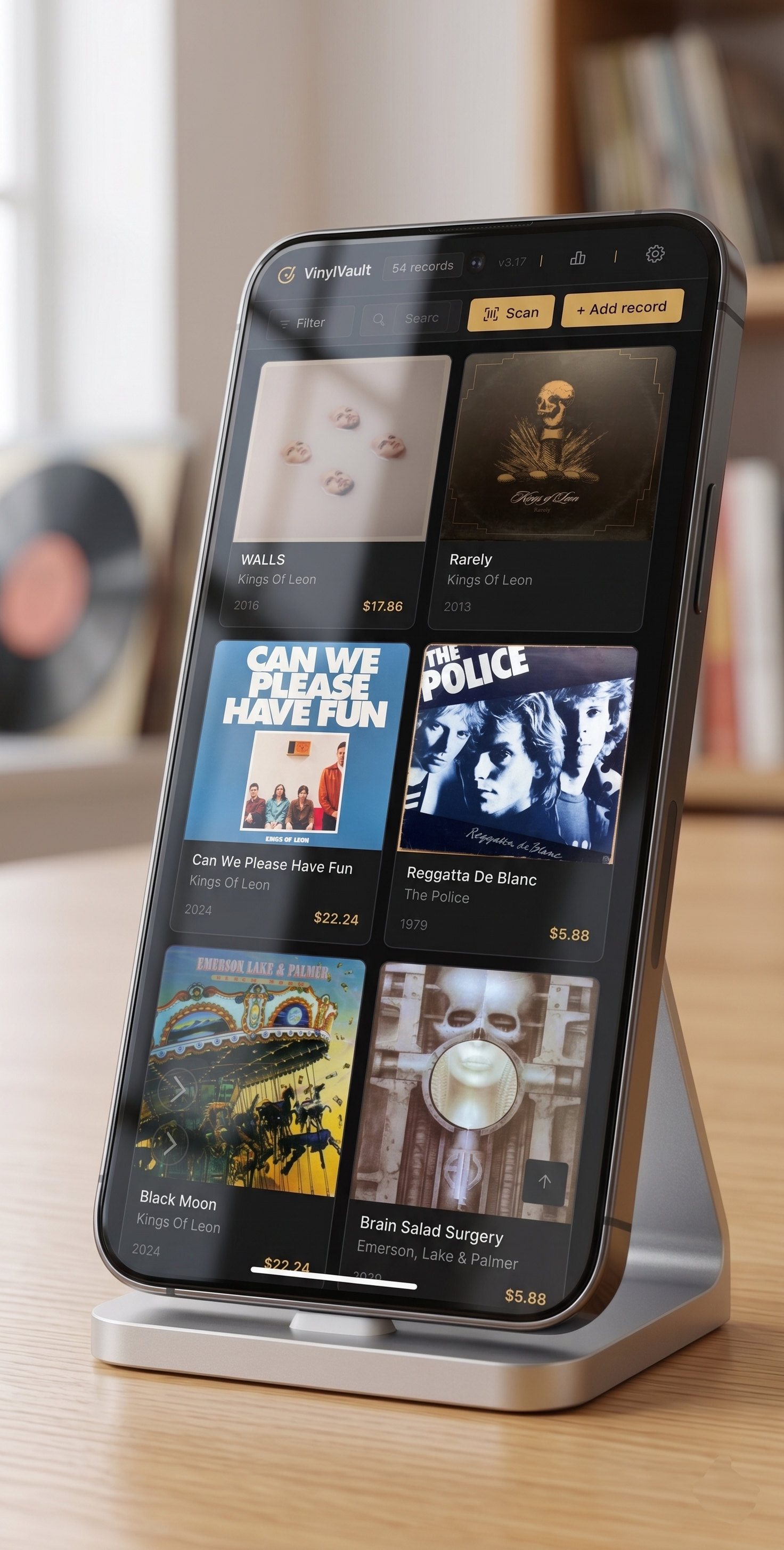
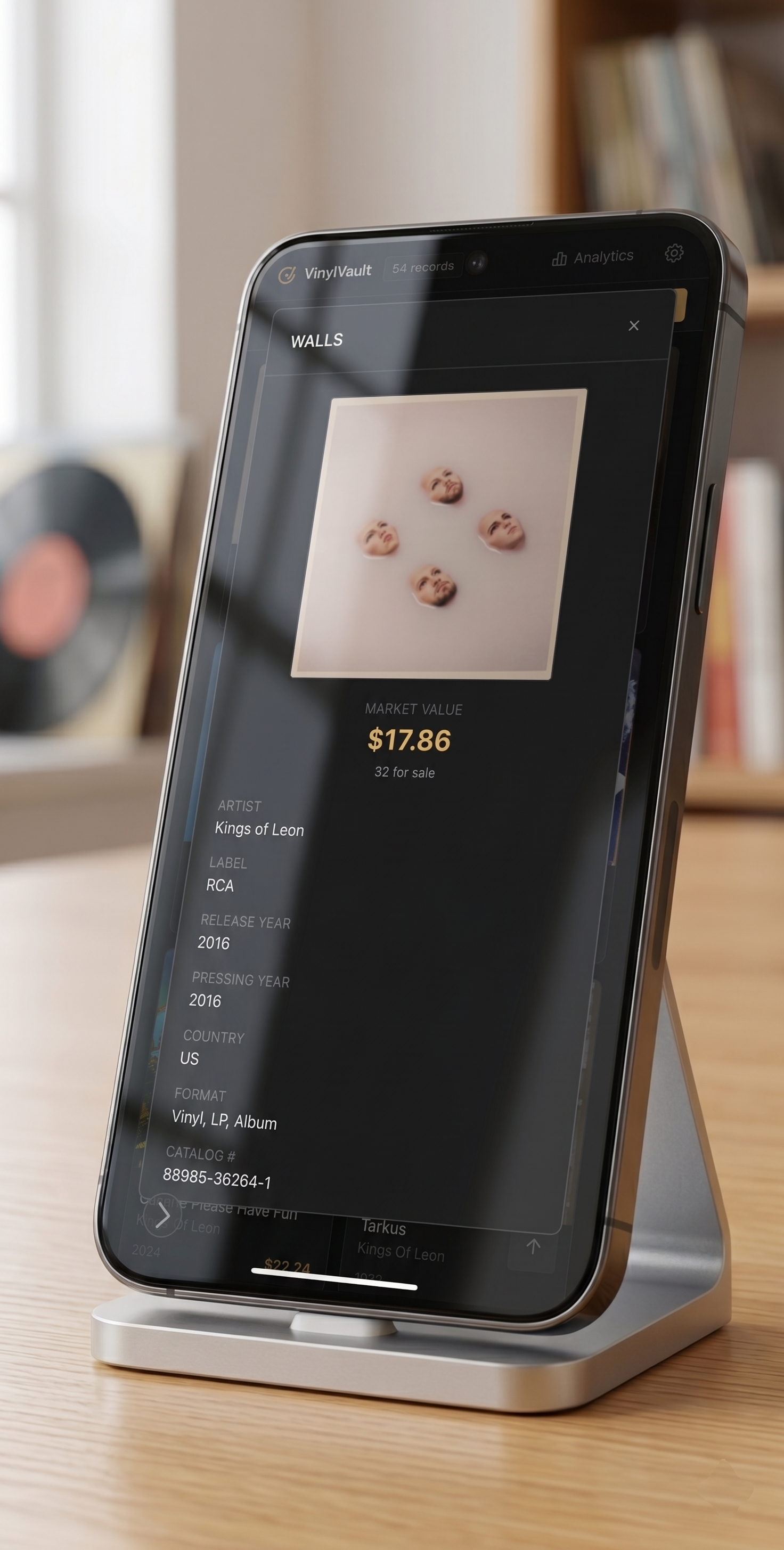
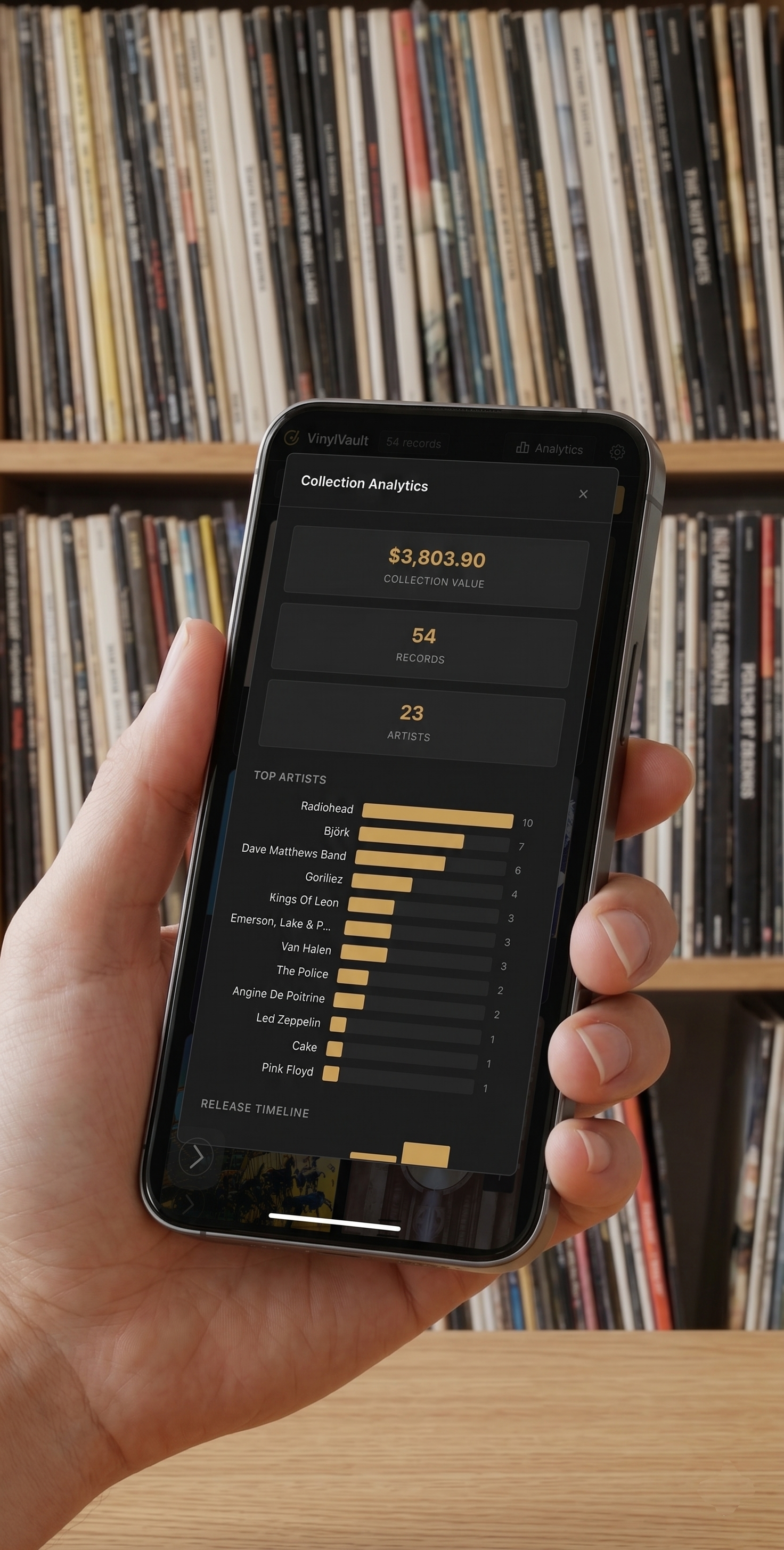
VinylVault connects to the Discogs database using your personal API key. You scan a record sleeve with your phone camera, and the app automatically pulls metadata: artist, album, pressing details, and market value. Everything syncs to local storage, so your collection stays with you.
You can sort by artist, year, condition, and market value. You can search for recent additions. You can see what your collection is worth, track price trends, and understand your collection in a way that's actually useful.
It looks exactly like I wanted it to look from day one. Dark interface built for the screen, fast enough to feel responsive, clean enough that it doesn't get in the way of the vinyl itself.
Results and Adoption
VinylVault is live on GitHub Pages and completely free. In the first two days, it's been cloned 411 times with 177 unique users. People are using it because it solves a real problem without forcing them into a subscription model or a bloated interface.
The feedback has been direct. Some collectors use it as their primary inventory system. Others prefer a lighter touch. Both matter because both show the tool is serving its purpose.
What This Reveals About Product Thinking
This project demonstrates something important about how I work and what's possible when design thinking meets intentional execution.
Most AI-assisted projects treat the tool as a generator: brief it, iterate once or twice, ship.
This was different.
I treated Claude Code like a thinking partner, not an automation machine. The AI didn't replace my judgment; it accelerated it.
The 36 iterations happened because I cared about the details, and not because the tool was insufficient. A product that someone uses every day has to earn that privilege. It has to feel thought-through, not generated.
For clients, this shows how I approach problems: clear about what we're trying to solve, rigorous about execution, willing to iterate until it's right, and comfortable using AI as a multiplier for thinking, not a substitute for it.
Try It:
VinylVault is free. It's built on open standards and connects to Discogs, a public database that collectors trust. If you collect vinyl, give it a try: https://lu31.github.io/vinylvault/
If you like it, I'd love to know why. If you don't, that matters too. I learn from both.
Long live the vinyl.