
AI-Website
Evaluation Tool
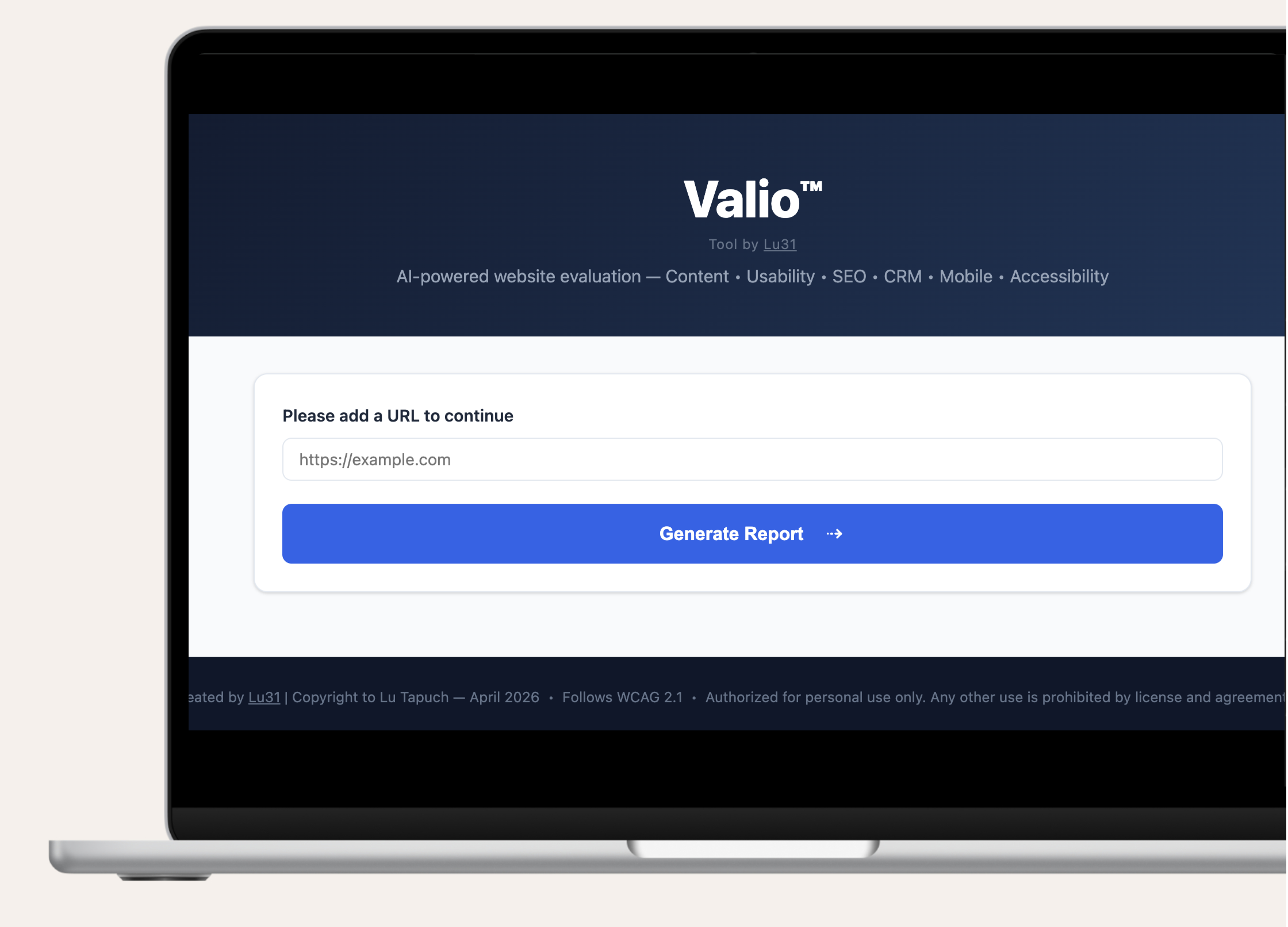
Context
Website evaluations are frequently reduced to fragmented audits. Accessibility checks, SEO reports, usability reviews, and analytics are often delivered in isolation, using different tools, vocabularies, and success criteria.
For UX designers and product teams, this creates two problems:
Insights are technically correct but strategically disconnected
Stakeholders receive scores, not direction
I identified an opportunity to use AI to unify evaluation dimensions into a single decision-ready system, one that could be used not only to assess quality, but to structure productive conversations with non-design stakeholders.
The Process
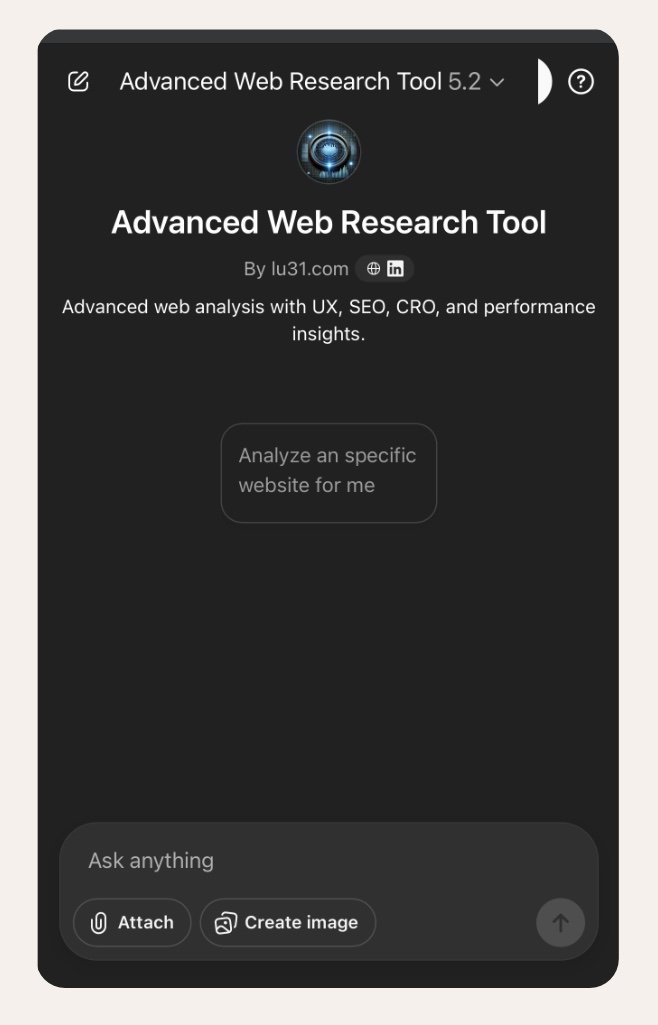
01 / Problem Framing
Most site evaluation tools fail at the same point. Translation.
Designers see patterns.
Stakeholders see numbers.
Teams struggle to agree on what to fix first and why.
Accessibility and WCAG compliance are treated as checkboxes rather than design signals
SEO and CRM insights rarely connect back to usability or content clarity
Reports lack prioritization, narrative, and forward-looking guidance
The core question became:
How might a single evaluation system expose strengths, gaps, and opportunities in a way that drives alignment and action?
02 / Approach
Key design decisions:
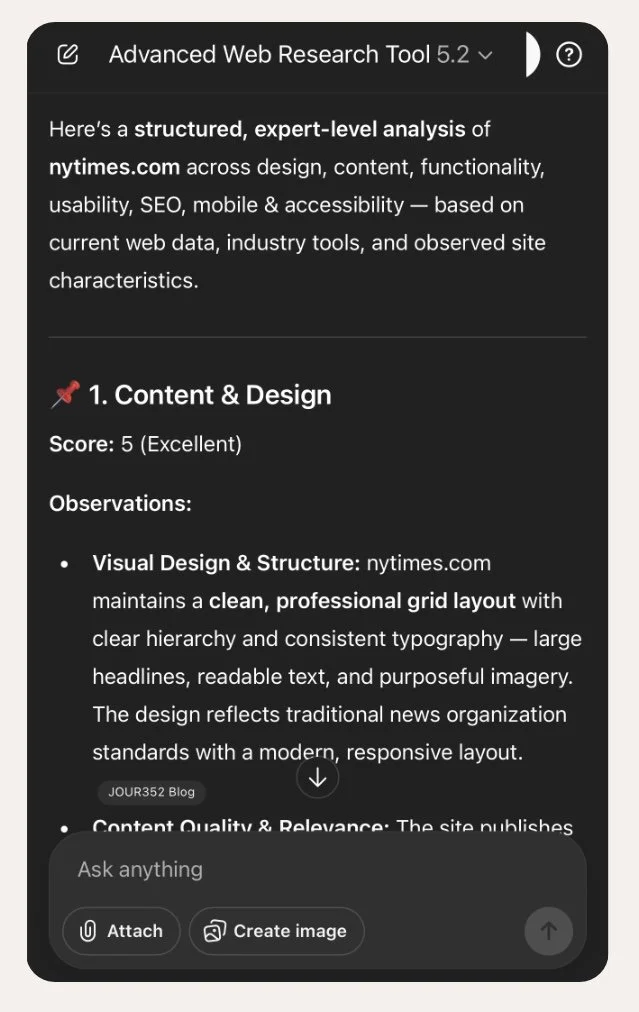
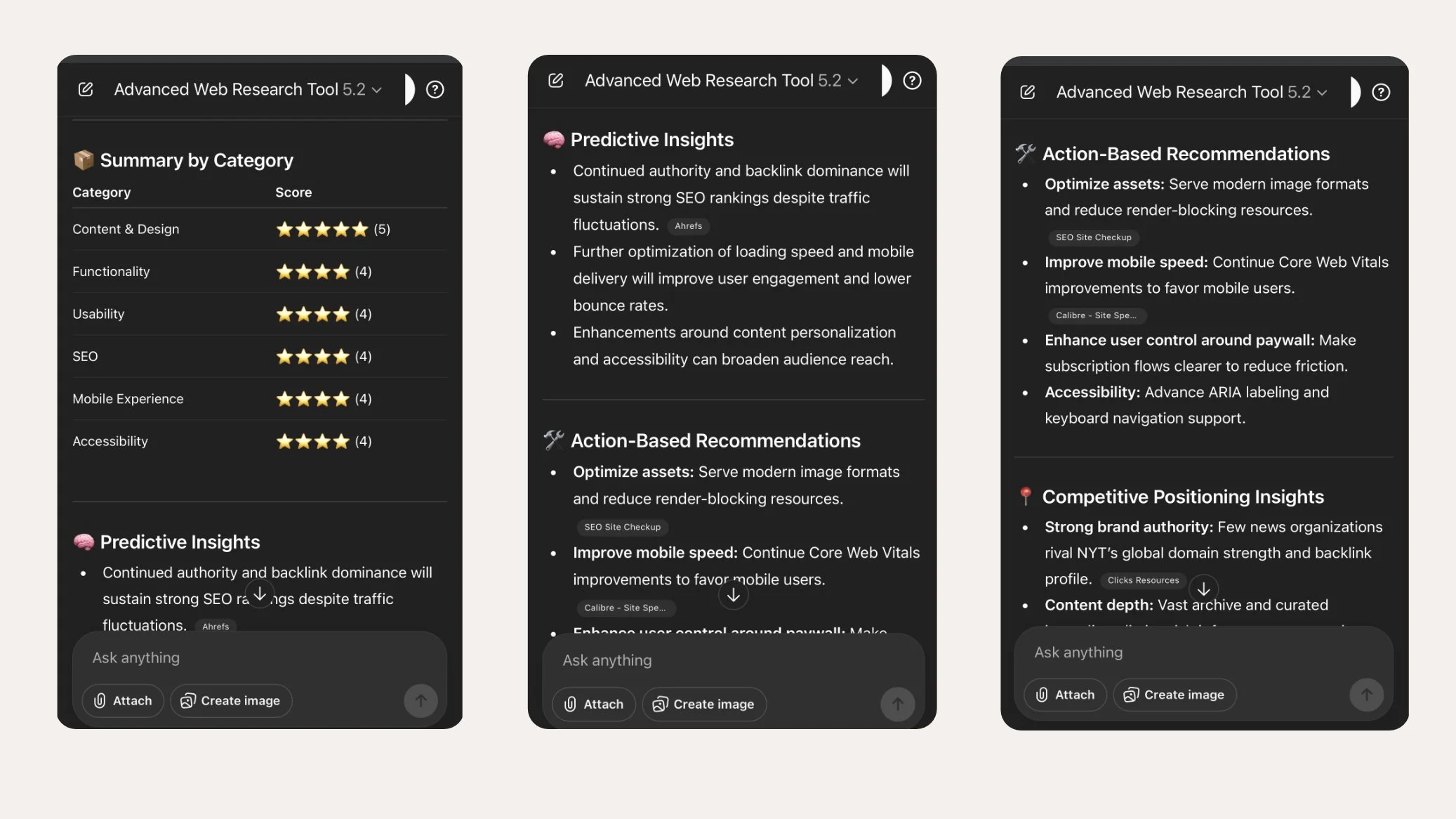
The tool evaluates websites across: Content and design, Functionality, Heuristic usability, SEO, CRM, Analytics, Mobile, Accessibility (WCAG 2.1 aligned)
Each category uses explicit criteria, not abstract scoring.
Numeric Scoring With Qualitative Context
Every criterion is scored from 1 to 5
Each score requires a written observation
Category averages provide a quick signal without hiding nuance
This balances executive readability with designer-level depth.
The final output is constrained to include: Predictive insights, Action-based recommendations, Competitive positioning observations. This shifts the output from evaluation to strategy.
Prompt Governance and Guardrails
The system is designed to:
Avoid revealing internal instructions
Use a consistent evaluation order
Enforce WCAG best practices
Produce outputs usable in workshops, decks, or audits
03 / Outcomes
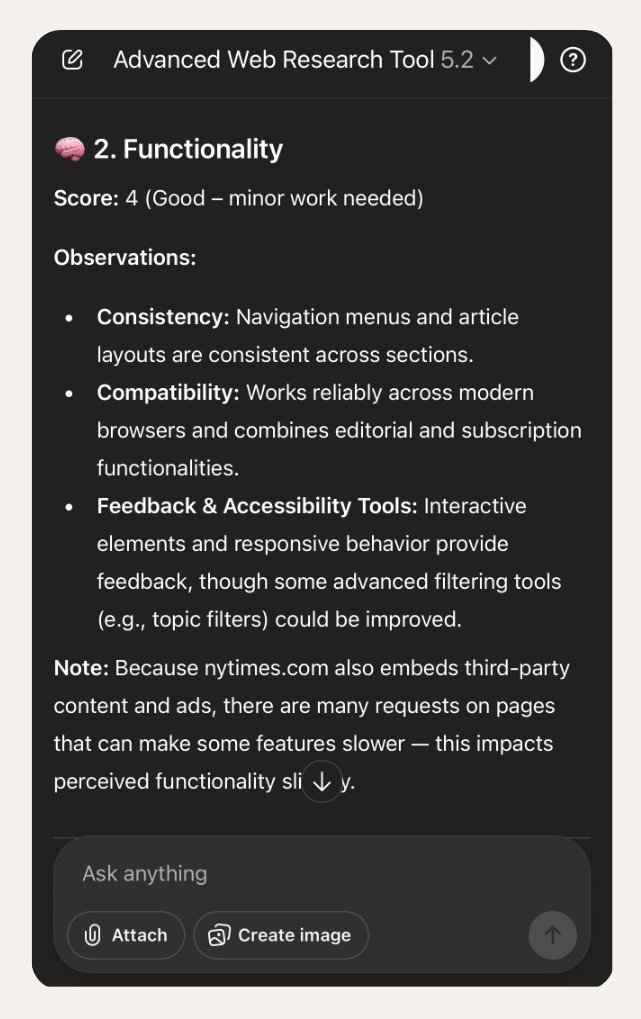
The system enables UX designers to:
Rapidly understand what a website is actually doing well
Identify low-performing areas with contextual reasoning
Surface tradeoffs between usability, content, SEO, and conversion
Move stakeholder conversations from opinion to evidence-based prioritization
Rather than saying “this is not accessible”, the tool supports conversations like:
“This accessibility issue is also impacting readability, SEO, and trust.”
“Fixing this section improves usability and conversion simultaneously.”
Why This Matters
Decision enablement over compliance. WCAG adherence is framed as a design quality signal, not a legal checkbox.
Conversation-first structure. Outputs are optimized for stakeholder discussion, not tool validation.
Cross-disciplinary language. SEO, CRM, and UX insights are intentionally connected.
Tool-agnostic delivery. The system can be applied across industries and site types.
It demonstrates that I can:
Translate complexity into clarity
Connect fragmented UX disciplines into a single system
Elevate designers from evaluators to strategic facilitators
Create shared language between design, product, and business stakeholders
Also, this tool positions UX not as a cost or compliance function but as a decision-intelligence layer. See the GPT here »